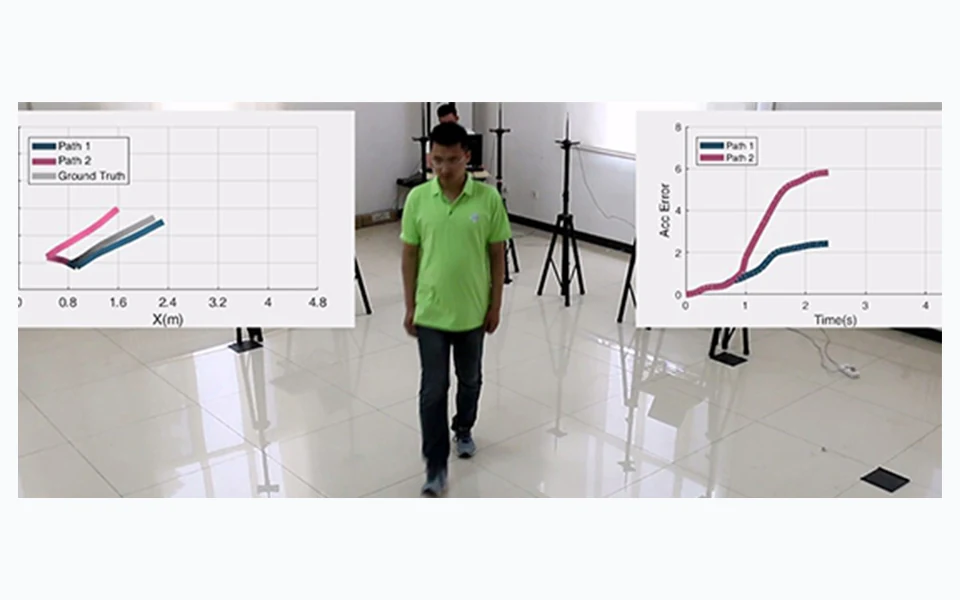
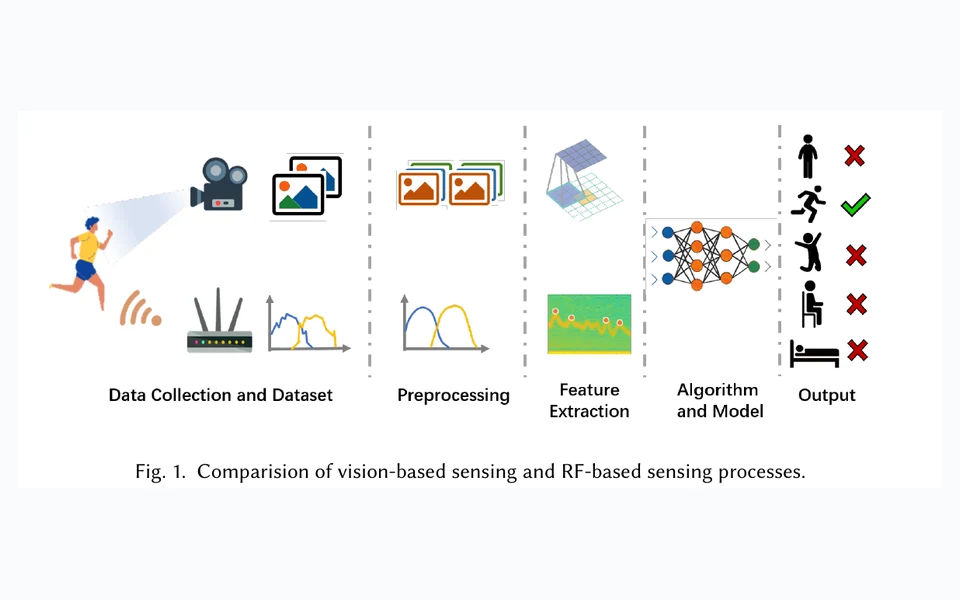
Wireless systems are more than pipes for moving bits: they are an interface between artificial intelligence and the physical world. My research asks how intelligent models can understand the structure and physics of radio signals, then use them to generate, perceive, localize, and act.
Generative AI for Wireless Systems
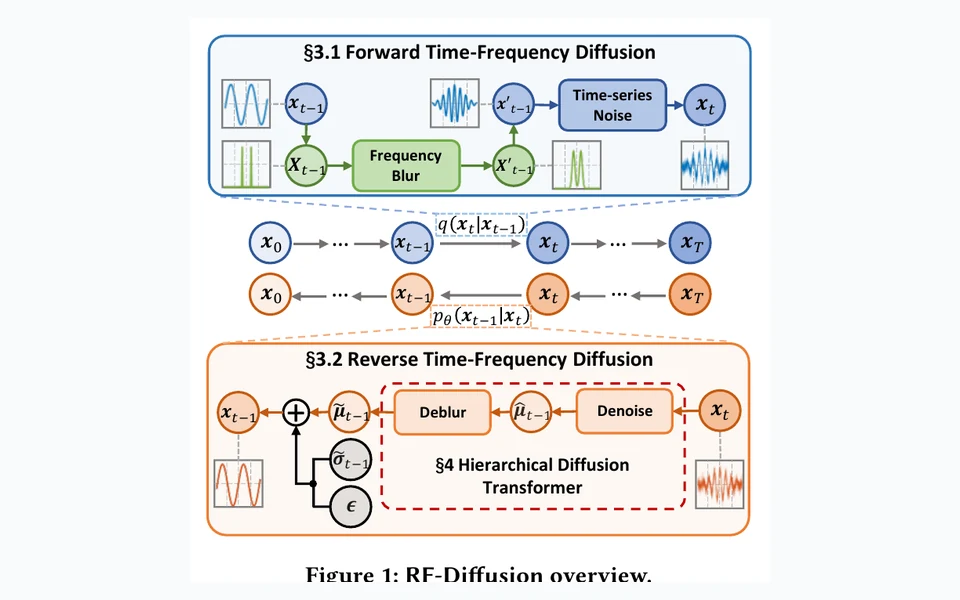
Generative models grounded in the structure and physics of radio signals.
I study generative models that respect the time-frequency, complex-valued, and physical structures of radio signals. The goal is to make generative AI a native tool for wireless data synthesis, channel understanding, sensing, and communication.
RF & Wireless Sensing
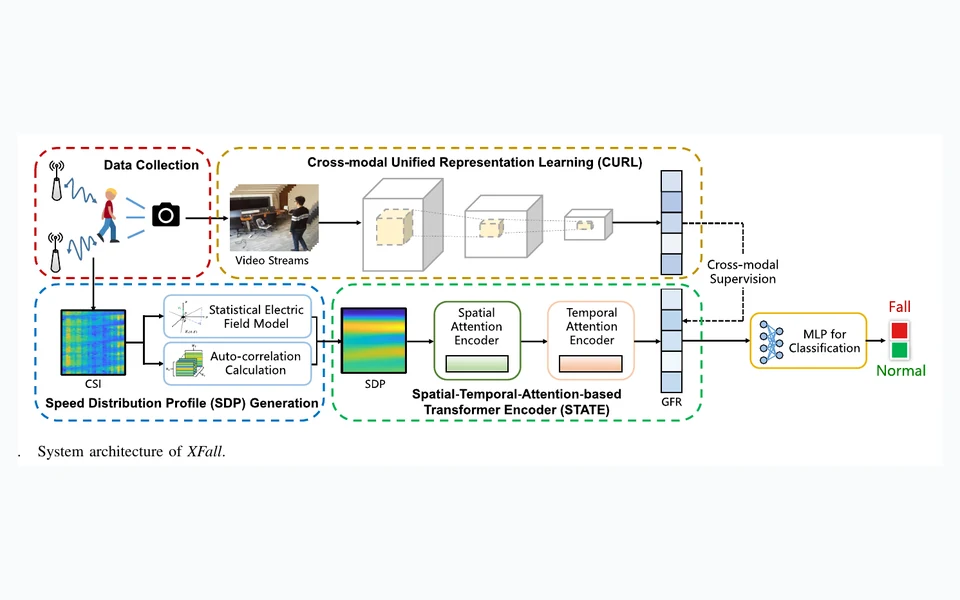
Reliable perception from signals already present in the environment.
I develop sensing and localization systems that turn Wi-Fi and mmWave signals into robust measurements of people, devices, and motion. A recurring question is how to generalize across environments, deployments, and sensing modalities.
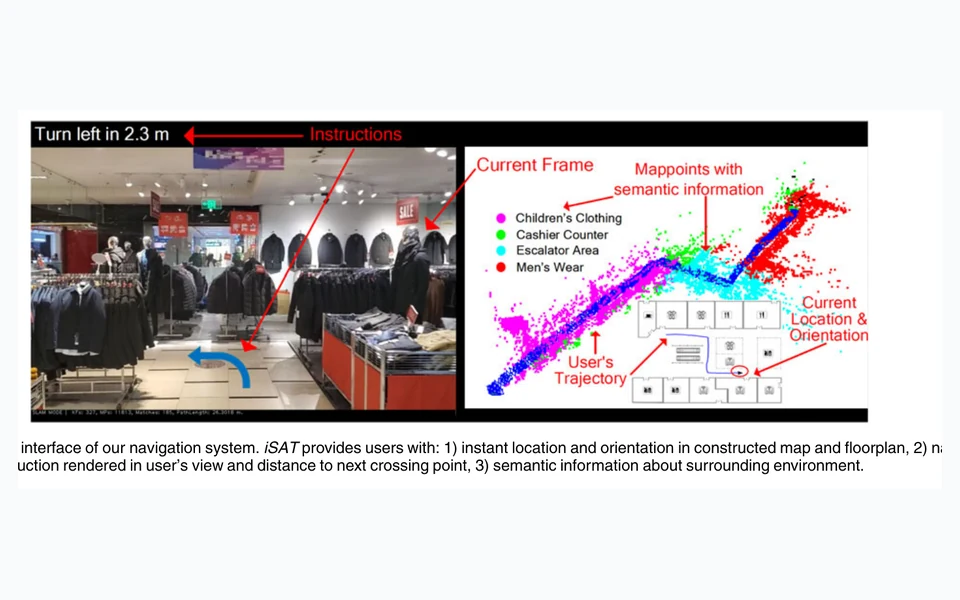
Embodied Navigation & Spatial Intelligence
Connecting perception, maps, and action for agents in the physical world.
I explore how heterogeneous sensors, online maps, and structured reasoning can support localization, navigation, and motion in physical environments. This direction extends my work from wireless perception toward embodied spatial intelligence.
Next steps in wireless intelligence for real-world AI
My forward agenda connects RF foundation models, multimodal spatial representations, and the co-design of communication, sensing, and action—from wireless data generation to embodied understanding of physical environments.
Related systems and research resources
These systems, codebases, datasets, and tutorials complement the research agenda above and support experimentation, teaching, and future collaboration.